Knee osteoarthritis can show up as morning stiffness, aching on stairs, or a feeling that a short walk now requires planning.
What’s Happening Medically
Osteoarthritis affects the whole joint, including cartilage, bone, joint lining, and surrounding muscles. Symptoms do not always match an X-ray: severe-looking imaging can come with mild pain, and vice versa. Strengthening, appropriate activity, weight management when relevant, and medical treatments can all improve comfort and function. Replacing movement with prolonged rest usually makes the knee less capable.
How TCM Interprets the Symptom Pattern
TCM may describe Bi syndrome, especially Damp or Cold-Damp patterns associated with heaviness and stiffness, or Qi and Blood stagnation around the joint. These labels are traditional ways of selecting acupuncture points; they do not indicate that the knee has a literal accumulation of “dampness.” The examination still considers swelling, function, and limitations.
How Acupuncture May Help
Acupuncture can offer modest improvements in knee pain and function for some people with osteoarthritis. Needles may be used around the knee together with distal points. Treatment supports movement, strengthening, and daily comfort, but it does not rebuild worn cartilage.
How Your TCM Pattern Changes Your Treatment
Acupuncture often addresses the main symptoms, while the broader TCM pattern may change the selection of additional points and whether complementary therapies or Chinese herbs are considered. These are traditional treatment approaches rather than Western medical diagnoses.
Qi and Blood Stagnation — Localized Joint Pain
Acupuncture commonly focuses on the knee and surrounding muscles, using points selected around painful movements. Additional distal points may be chosen when the broader pattern suggests them. The aim is easier walking, stair climbing, and exercise participation.
Cold-Damp Bi Pattern — Stiffness and Heaviness in Cold Weather
If discomfort is worse in the cold, moxibustion or a TDP heat lamp can be used for comfortable warmth when sensation and skin condition permit. Warming treatment may ease stiffness; it is not used on an acutely hot, red, or swollen joint.
A Chronic Deficiency Pattern — Recurrent Aching with Low Energy
For patients with longstanding aches plus fatigue or other symptoms, Chinese herbs may be considered for the overall TCM pattern while acupuncture remains directed toward knee pain and mobility.
About warming therapies: Moxibustion uses warmth from burning dried mugwort near acupuncture points. A TDP lamp is a therapeutic heat lamp that warms a selected area without burning herbs. Both may temporarily ease muscular stiffness; the choice depends on symptoms, skin condition, and sensation.
The Role of Chinese Herbal Medicine
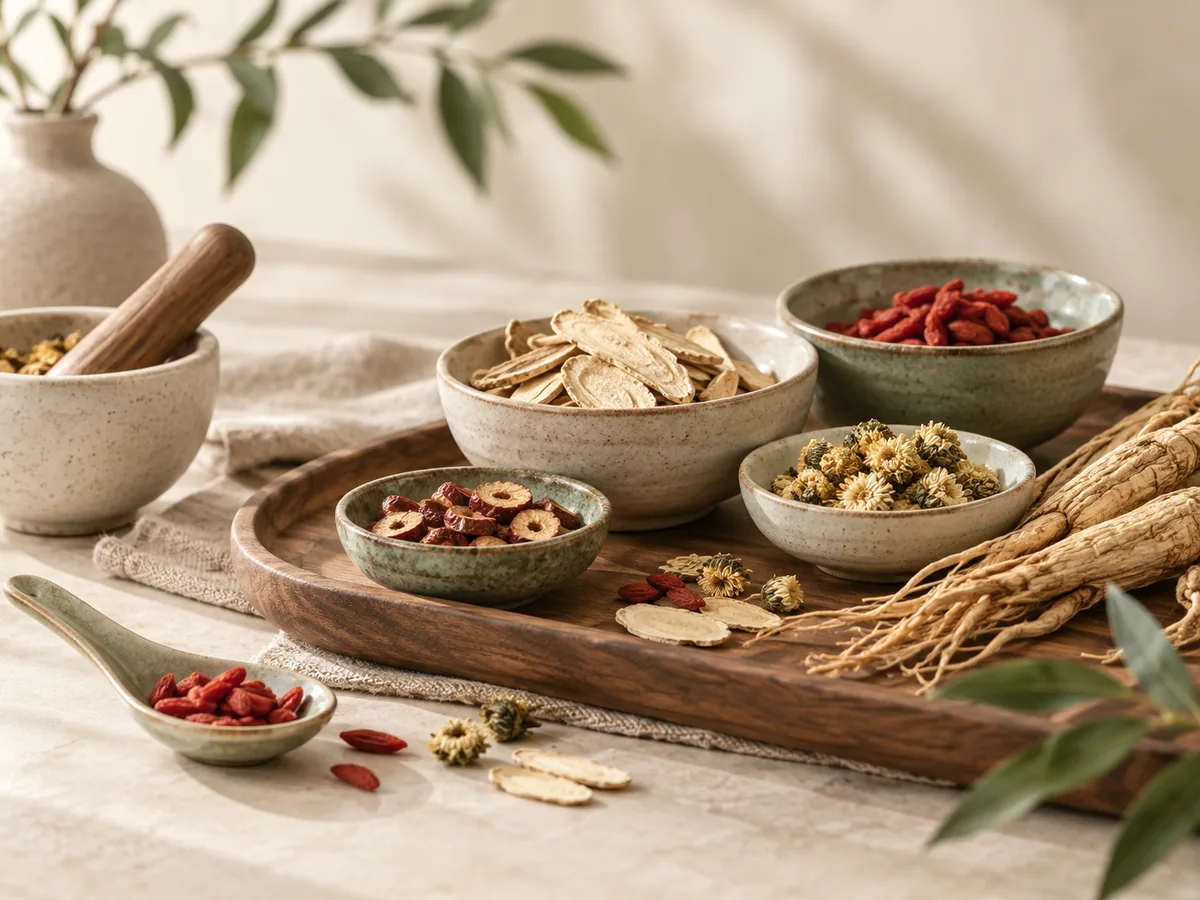
Acupuncture typically focuses on the presenting symptoms, while Chinese herbal formulas, when appropriate, are selected according to the broader TCM pattern, including sleep, digestion, fatigue, and other accompanying symptoms. Herbs are not necessary or suitable for everyone; medication, pregnancy, and cancer-treatment precautions take priority.
What to Expect at Alignment
At Alignment Acupuncture & Wellness, we tailor your acupuncture treatment to your symptoms, medical history, and individual response.
For musculoskeletal pain, acupuncture often focuses on the affected area, while the broader TCM pattern can guide additional points, warming methods, or an optional discussion of Chinese herbal medicine.
When suitable, we may recommend an individualized Chinese herbal formula to complement your acupuncture care. We can order formulas through our clinic. Purchasing Chinese herbal medicine through Alignment incurs an additional charge, which varies depending on the specific formula.
Before suggesting herbs, we review your medications, relevant medical conditions, and potential interactions.
After approximately 2–4 treatments, we can begin evaluating your progress and develop a clearer understanding of what continued treatment may realistically accomplish.
Acupuncture and Chinese herbal medicine, when appropriate, often work best alongside other indicated medical care and healthy daily habits. Results vary from person to person.
When to Seek Medical Care
A suddenly hot, red, very swollen knee, inability to bear weight, fever, or significant injury needs prompt medical assessment. See a clinician if pain progresses, the joint locks, or swelling repeatedly returns.
A Personalized Approach
Keeping the knee moving safely is central to long-term progress.
Interested in learning whether acupuncture may be appropriate for your symptoms? Schedule a consultation with Alignment Acupuncture & Wellness.
Sources & Further Reading
Medical Disclaimer
The information provided in this article is for educational purposes only and is not intended as medical advice, diagnosis, or a substitute for professional medical care. Every patient’s condition is unique, and treatment recommendations should be based on an individualized evaluation. Always consult a qualified healthcare professional regarding your symptoms or medical concerns. Acupuncture and Chinese herbal medicine are complementary approaches and should not replace necessary medical treatment.